Animation Styles
12 Animation Styles Explained (With an AI Prompt for Each)
Twelve animation styles, from 2D and anime to stop-motion and pixel art, explained in plain words with one copy-paste AI image prompt for each.
September 15, 2026 | 13 min read
Most lists of animation styles are written for people about to hire a studio. This one is for people about to type a prompt. Each style below gives you the marks you can spot in a single still frame, followed by one prompt that produces it. Every image on this page was made from the prompt beside it. We kept the scene fixed across all twelve: a chaiwala pouring tea at a rain-soaked Mumbai railway platform at dawn. When the scene never changes, the only thing you see shifting is the style.
How to read a style, and how to ask for it
Every style breaks down into four pieces you can name: technique, material, camera, and era. Technique is how the image came to exist: drawn, modeled, photographed, or painted. Material is the physical stuff you look at: paper, clay, pixels, or oil. Camera is the lens: flat, orthographic, 35mm, or macro. Era pins down the decade: 1930s rubber-hose, 1990s Saturday morning, or 2020s digital. Put those four into words and you rarely need to name an animation studio.
Leave studio and film names out of your prompt box. Many tools block brand names, while others ignore them and guess. A plain description travels from Midjourney to ChatGPT and Gemini without losing its shape. Ask for soft subsurface skin, oversized eyes, and rounded silhouettes instead of naming a company. The films named on this page are references for your eyes, not words to copy into a prompt.
Technique: drawn, modeled, photographed, painted
Material: paper, clay, pixels, oil
Camera: flat, orthographic, 35mm, macro
Era: 1930s rubber-hose, 1990s, 2020s
How to write better AI photo prompts
Which style for which job
Most people arrive with a job, not a style name. The job decides more than taste does, because it fixes where the image will be seen. A thumbnail on a phone wants thick lines and flat color, or the details smear. A printed card wants paper texture. A company banner wants restraint.
Two of the jobs below have their own prompt hubs on this site, poster design and YouTube thumbnails, and the product and headshot pages cover two more. The map is short on purpose. Match the job, then go to that style's section and take the prompt.
Diwali or festival greeting for a shop or family group: motion graphics or flat cartoon (reads at WhatsApp size, takes text well).
Wedding invite or save-the-date: watercolor or sketch (paper texture suits print, softer than a photo).
YouTube thumbnail: cartoon or 3D (thick outlines and big expressions survive a 168px preview).
Product ad for Instagram: photorealistic (buyers want the real item) or 3D render when the product is not manufactured yet.
LinkedIn banner or company page: motion graphics or clean 2D (flat and quiet, with no face to argue with).
Kids' school project or storybook page: 2D or watercolor (friendly, easy to print, and without uncanny faces).
Reel cover or music visual: experimental or anime (where strong mood and tone matter far more than fine detail).
2D animation
Flat drawings, shown one after another. That is all 2D animation is, and for most of a century it was the default: every frame drawn by hand, inked onto a clear cel, painted from behind, then photographed over a background painting. The Lion King was made that way in 1994. Klaus, the film from 2019, is drawn by hand too, but its crew lit the drawings as if they were solid objects. If you grew up on Chhota Bheem you know the cheaper end of the same craft: thick outlines, flat color, a background that never moves.
In one frame the giveaway is the line. It has one weight, it closes every shape, and the color inside is flat with at most one shadow tone. There is no lens, so nothing is out of focus.
You will usually get this look on the first try. The way to ruin it is to add words like cinematic or detailed, which drag the result toward 3D. If the output looks plastic, drop those words and add flat cel shading and one shadow tone.
Uniform ink line around every silhouette
Flat color fills with one shadow tone
Hand-painted background plate behind character cels
A chaiwala pouring tea from a steel kettle into a small glass at a rain-soaked Mumbai railway platform at dawn, steam rising, one commuter waiting under the platform light. Traditional hand-drawn 2D animation style, clean ink outlines, flat cel shading with soft volumetric lighting, warm color palette, wide 35mm cinematic composition, mid-1990s feature film look. No text, no watermark.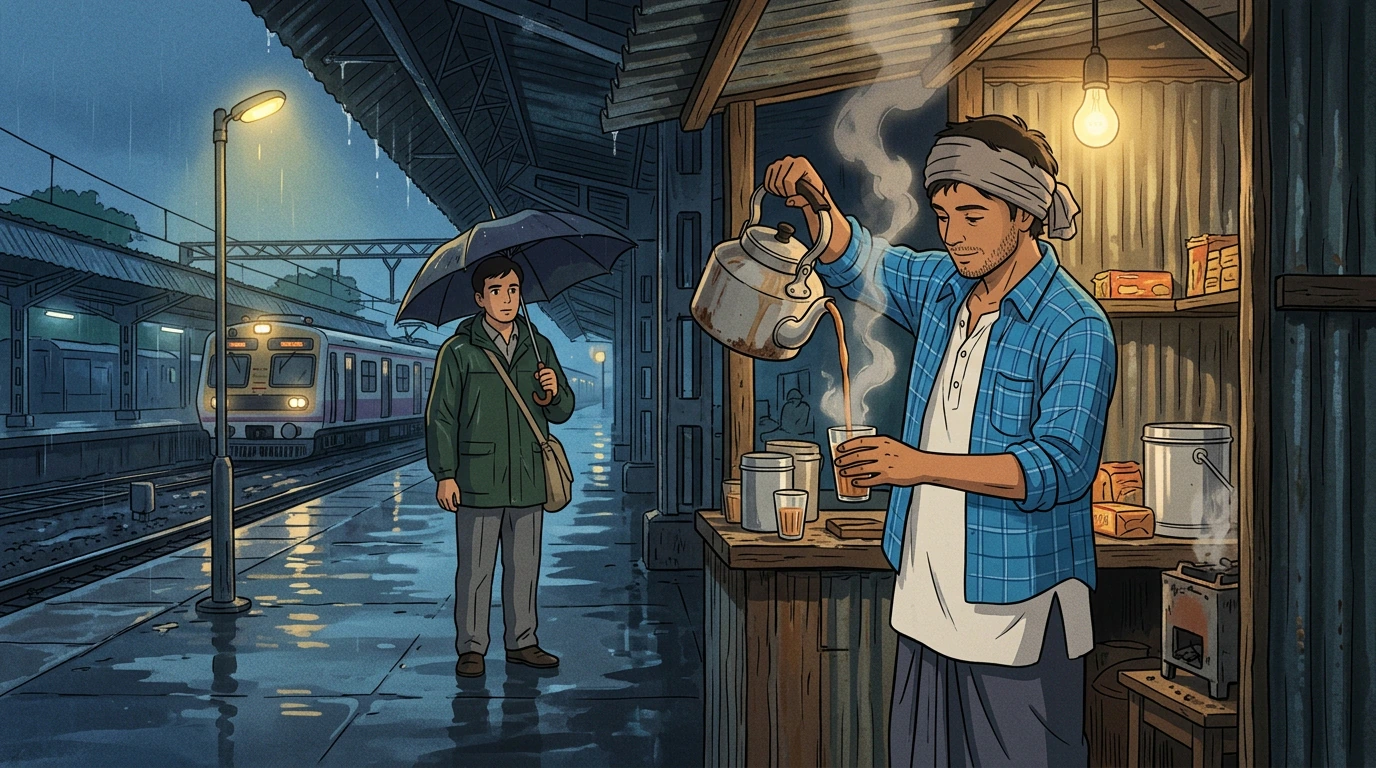
3D animation
Puppets built inside coordinate space. Instead of drawing paper frames, artists build polygonal models, paint virtual surfaces, and rig joints so the figure can bend. Toy Story proved the computer could carry a whole feature back in 1995. Arcane from 2021 painted digital textures by hand to hide the coldness of 3D, while the makers of Spider-Man: Into the Spider-Verse in 2018 dropped frames on twos and stamped comic halftone dots onto rendered models.
In a single still, look at the light wrap. Shadows pool inside clothing folds, while skin glows from subsurface scatter. Prompting for subsurface scattering on skin, brushed steel kettle texture, and a 50mm portrait lens prevents dead videogame wax. Games like Monument Valley show the opposite extreme: flat isometric cameras turning basic geometry into architecture.
A chaiwala pouring tea from a steel kettle into a small glass at a rain-soaked Mumbai railway platform at dawn, steam rising, one commuter waiting under the platform light. Three-dimensional computer animation, modeled digital assets, subsurface skin scattering, tactile brushed metal, realistic water puddles, 50mm portrait lens, shallow depth of field, contemporary feature animation look. No text, no watermark.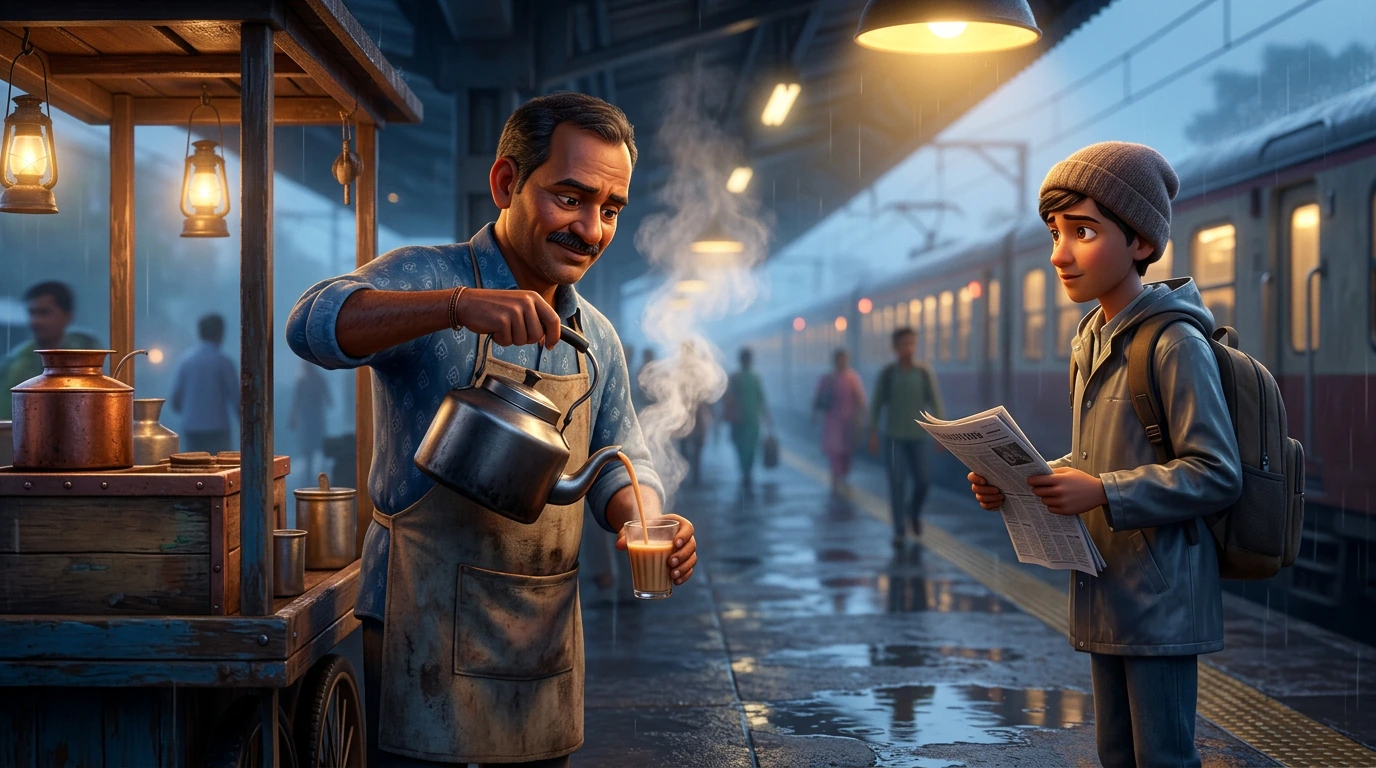
Anime and manga
Big eyes and painted skies. That combination defines Japanese commercial animation. Studios save their budget on character movement and pour it into backgrounds: watercolor clouds, sharp platform light, and rain puddles on station concrete. Spirited Away in 2001 showed how painterly that world could feel, Your Name in 2016 pushed dawn skies to theatrical heights, and Demon Slayer paired digital camera moves with brush lines. Manga is its black-and-white print sibling, made with pen ink and screentone dot paper. In a still frame, look for thin lines and rim light along the hair. If your prompt yields glossy fan art, strip out modern digital terms and ask for a 1990s cel anime look with hand-painted background scenery.
Hair catching sharp rim light
Hand-painted scenic background with morning sky gradient
Oversized eyes on a simplified face line
A chaiwala pouring tea from a steel kettle into a small glass at a rain-soaked Mumbai railway platform at dawn, steam rising, one commuter waiting under the platform light. Japanese anime film look, fine delicate line work, hand-painted background scenery, dramatic atmospheric backlighting, rich morning sky gradient, 35mm cinematic angle, mid-2010s theatrical anime production style. No text, no watermark.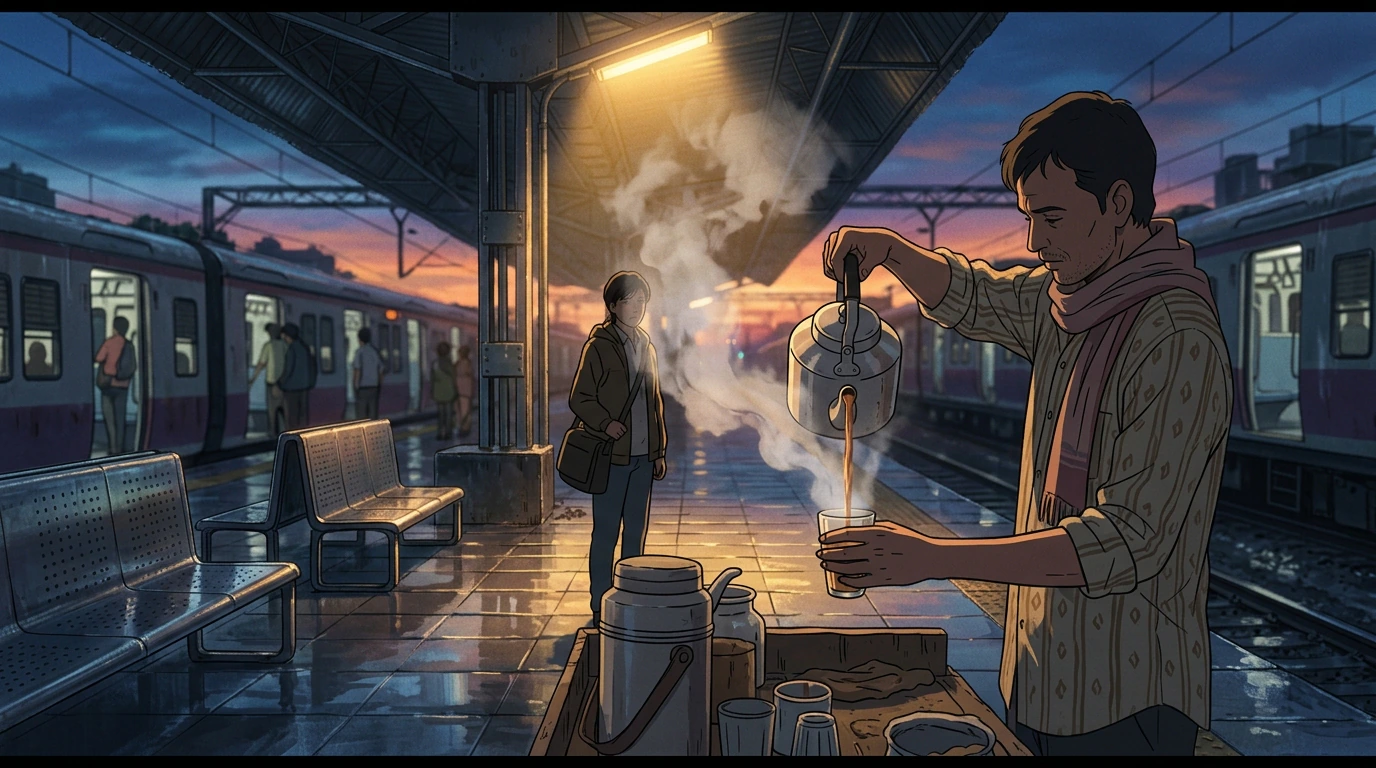
Character illustration prompts
Cartoon
Stretch the limbs, squash the body. There are no bones. Western television cartoons care about physical comedy and quick silhouette reading, not realistic anatomy. The lineage runs from Looney Tunes shorts to Adventure Time and Indian broadcast hits like Motu Patlu from 2012 onward. Cuphead, the 2017 indie game, revived the 1930s look with pie eyes and limbs that bend like garden hose, which is where the name rubber-hose comes from.
In one still, look for thick ink strokes of unvarying weight, bright solid fills, and no realistic depth of field. The pitfall is soft shading that rounds out the forms. Writing flat gouache color, thick black contours, and no gradients keeps the drawing flat.
A chaiwala pouring tea from a steel kettle into a small glass at a rain-soaked Mumbai railway platform at dawn, steam rising, one commuter waiting under the platform light. Western television cartoon style, bold black contour lines, simplified character anatomy with exaggerated proportions, solid flat colors, minimal cel shadows, wide eye-level camera framing, early 2010s animated broadcast look. No text, no watermark.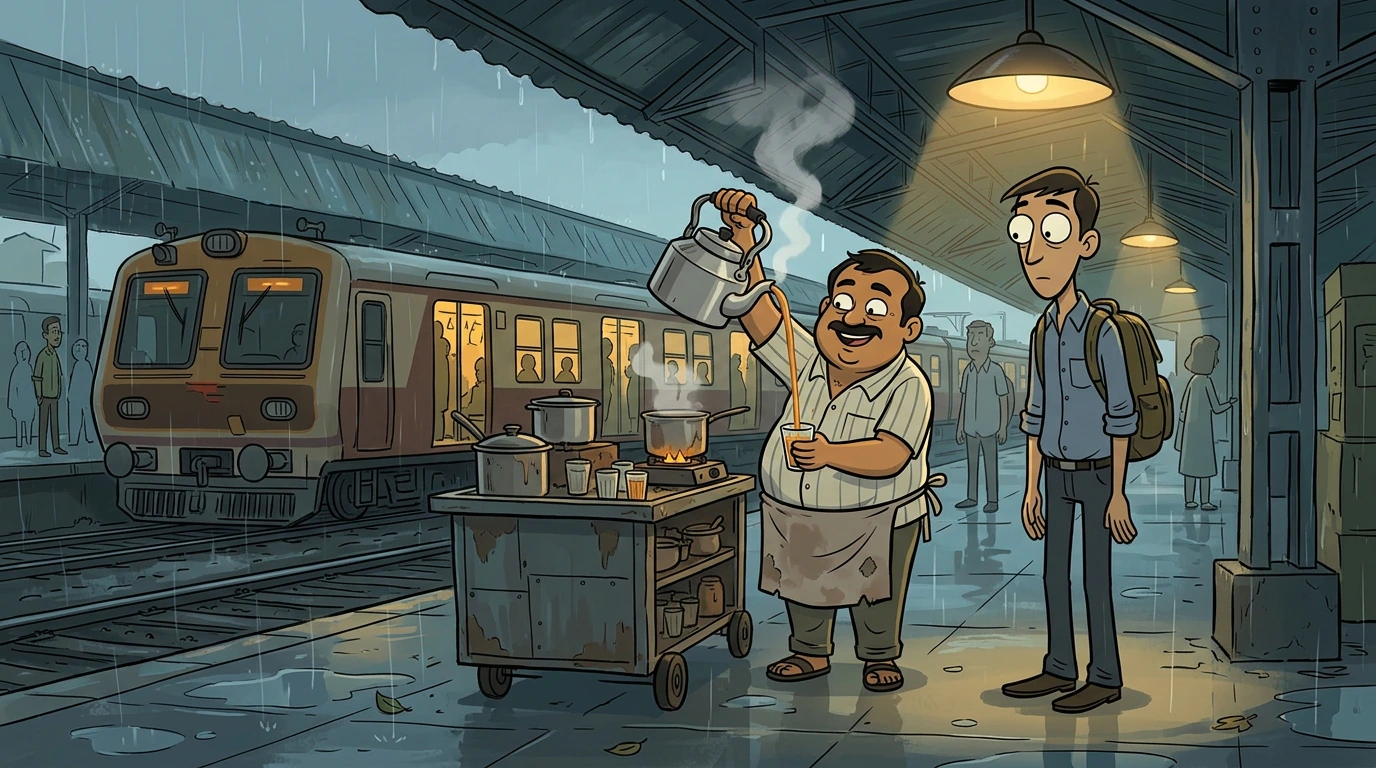
Realistic and photorealistic
Count the pores on the skin. Photorealistic computer generation tries to remove all signs of drawing and modeling, making digital assets look like real camera footage. Left to default settings, image models produce waxy skin and tea pouring like frozen glass. Dropping generic buzzwords and naming an 85mm cinema lens at f/1.8, natural morning mist, and subsurface skin scattering grounds the shot in actual camera optics.
Look at the reflections. A single still frame reveals micro skin texture, optical lens flare, and wet platform puddles matching overhead lamps. Avatar did this through performance capture, The Lion King photoreal remake from 2019 replaced cels with ray-traced savannah animals, and modern Unreal Engine cinematics render wet pavement reflections in real time.
A chaiwala pouring tea from a steel kettle into a small glass at a rain-soaked Mumbai railway platform at dawn, steam rising, one commuter waiting under the platform light. Photorealistic computer-generated digital human look, high-end film VFX render, physically based materials, precise wet asphalt reflections, micro skin pore detail, 85mm cinema lens, f/1.8 aperture, soft morning mist, modern cinematic production. No text, no watermark.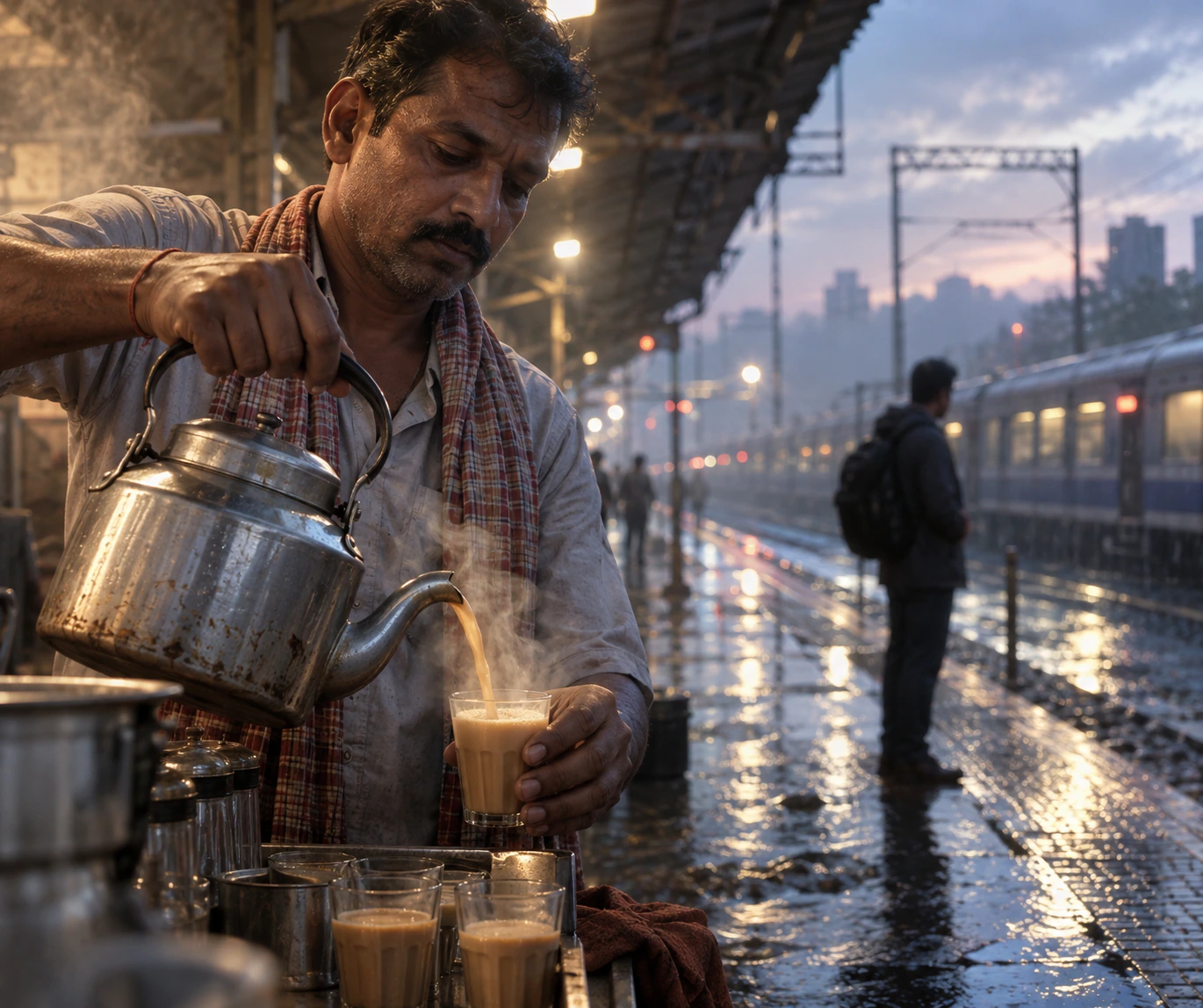
Stop-motion: clay, paper and puppets
Real clay under hot studio lights. Stop-motion animators bend armatures inside puppets by millimeters, step out of frame, and take one photo. Wallace and Gromit from Aardman and Pingu used plasticine, Fantastic Mr. Fox from 2009 used hair and cloth, and South Park started with construction paper cut-outs. Laika pushed the craft on Coraline in 2009 and Kubo and the Two Strings in 2016 by 3D-printing thousands of replacement faces for each puppet.
Look at the edges. You should see miniature fabric weave, dust specks, and shallow depth of field from macro lenses close to miniature props. Prompt for claymation alone and you get a generic smooth 3D render. To fix it, ask for physical flaws: visible thumbprints in the clay, wire armature limbs, and a 50mm tilt-shift lens.
Thumbprint dents on plasticine skin
Coarse cotton thread on miniature coats
Blurry background from macro lens depth
A chaiwala pouring tea from a steel kettle into a small glass at a rain-soaked Mumbai railway platform at dawn, steam rising, one commuter waiting under the platform light. Stop-motion puppet animation, sculpted colored clay figures with visible thumbprints, miniature handmade wooden platform set, tiny fabric clothes, glass bead tea droplets, macro 50mm tilt-shift lens, practical miniature lighting, physical craft look. No text, no watermark.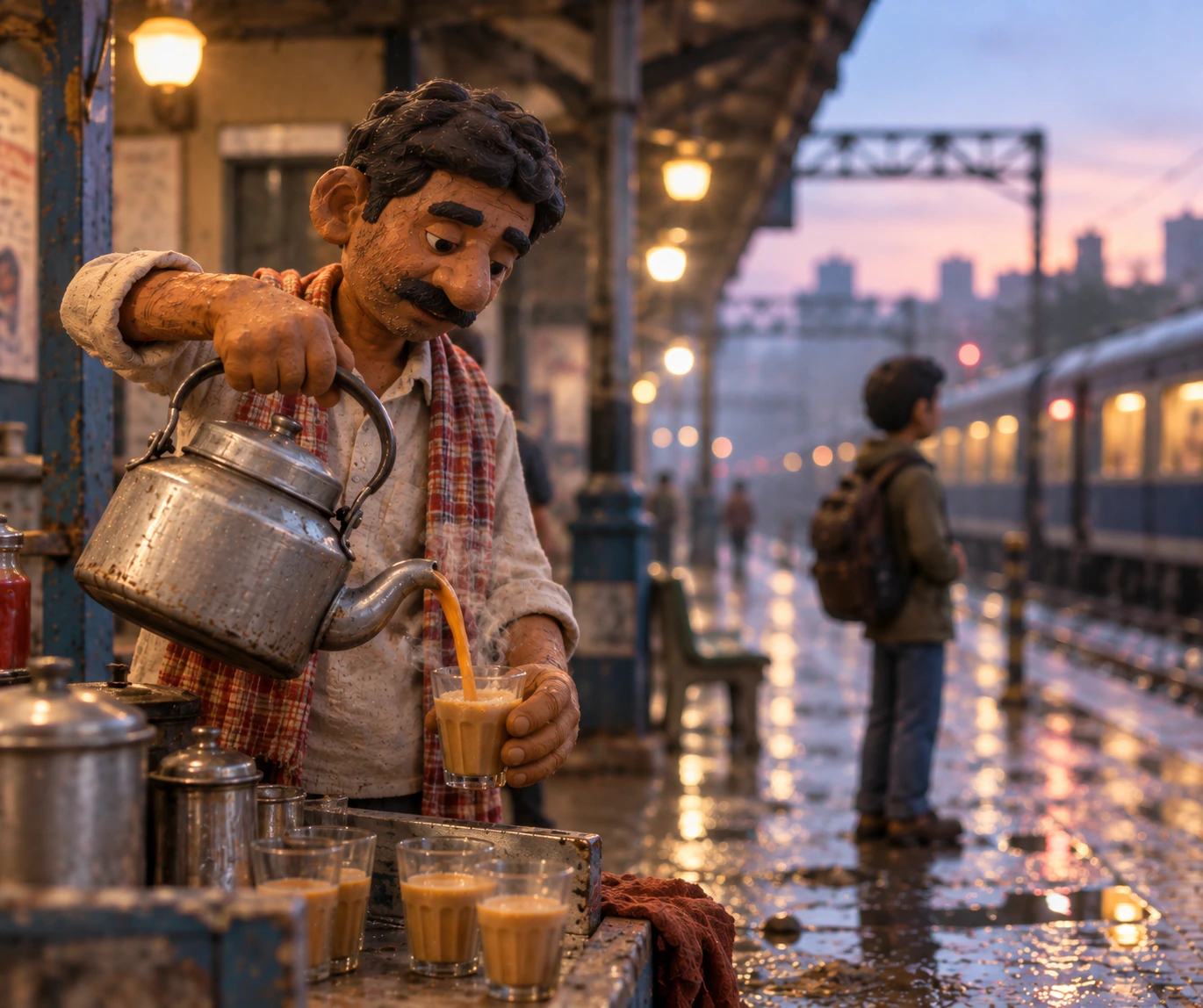
Motion graphics
Type and flat color blocks. Nobody is acting here. Motion graphics comes from graphic design rather than narrative character drawing on paper. Generative models tend to draw realistic faces unless you strip out character nouns. Asking for flat geometric paper cutouts, four colors maximum, and explicit typography like MUMBAI 6:40 AM keeps the composition clean. In a single still, the result looks like a screen-printed poster with flat vector shapes and no camera vanishing point. Saul Bass pioneered the discipline on film title sequences in the 1950s, and the Catch Me If You Can titles from 2002 brought the same paper-silhouette language back. Today it is the house style of explainer videos and app onboarding screens.
A chaiwala pouring tea from a steel kettle into a small glass at a rain-soaked Mumbai railway platform at dawn, steam rising, one commuter waiting under the platform light. Minimalist motion graphics, sharp vector shapes, flat geometry, screen-printed poster look, restricted four-color palette, orthographic flat camera, 1960s film title sequence styling. Clean composition with bold typography reading MUMBAI 6:40 AM and nothing else textual.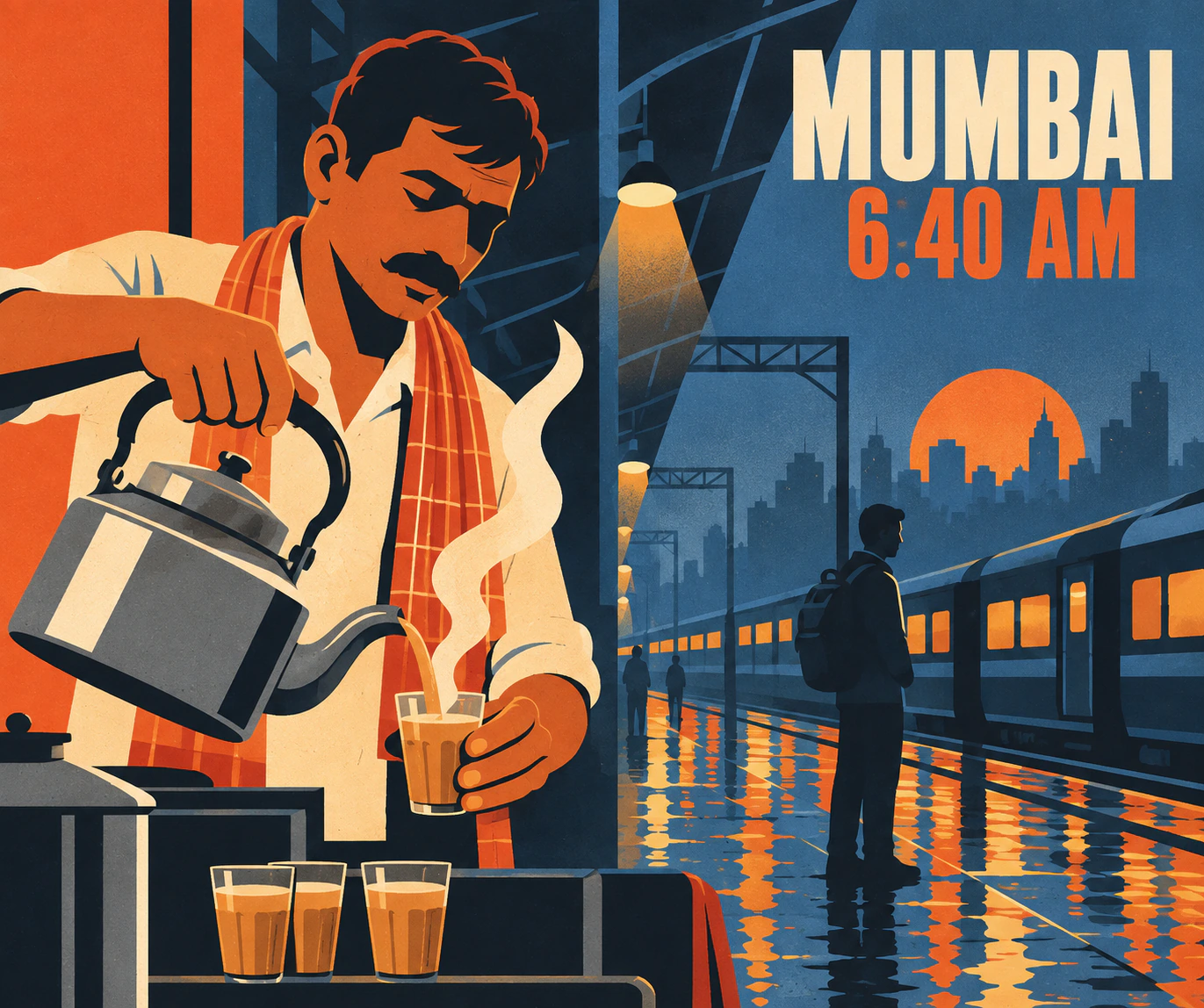
Comic and graphic novel
Ink lines printed on cheap paper. This style lifts the mechanical printing limitations of comic books and brings them to the screen. In India, Amar Chitra Katha has used strong ink outlines and flat color panels since 1967. In Europe, Tintin popularized ligne claire, where every contour shares an identical ink weight without shadow hatching.
Cinema versions turn that print language into motion. Frank Miller framed Sin City in stark black silhouettes, while Persepolis from 2007 kept the rough ink strokes of its graphic memoir source on screen.
In one still, look for Ben-Day halftone dot patterns in the mist, brush hatching across cheekbones, and dark ink shadows. When an image model fails here, it gives you glossy digital concept art. Force the print look back into the frame by asking for heavy black brush ink outlines, rough newsprint paper grain, and dot screentone shading.
A chaiwala pouring tea from a steel kettle into a small glass at a rain-soaked Mumbai railway platform at dawn, steam rising, one commuter waiting under the platform light. Graphic novel illustration, heavy black brush ink outlines, crisp Ben-Day halftone screen patterns, selective gouache spot coloring, dramatic high-contrast side lighting, Dutch angle camera framing, classic serialized comic book panel. No text, no watermark.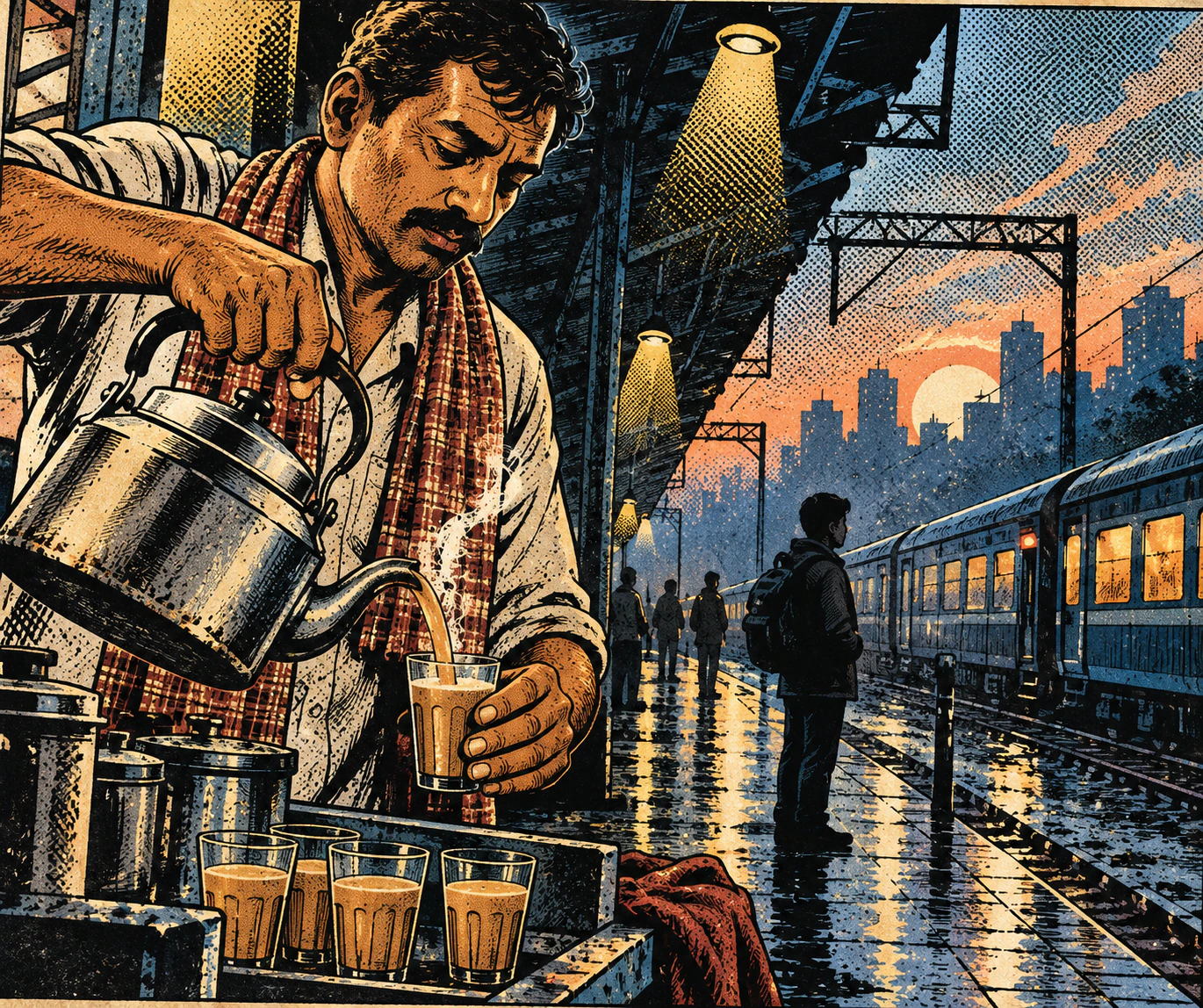
Pixel art
Every square placed by hand. Pixel art grew out of memory limits on 8-bit consoles like the 1985 NES release of Super Mario Bros. Left to themselves, models draw blurry illustrations and slap a pixel filter over them. Naming an indexed sixteen-color palette, 16-bit arcade sprite style, and dithered shading on platform tiles forces hard square edges. You can spot the real craft by jagged diagonal step edges. Modern indie hits like Stardew Valley from 2016 and Celeste from 2018 proved the constraint was an art form in its own right, while Octopath Traveler in 2018 paired flat sprites with tilt-shift depth. Minecraft voxels are 3D cubes, which is a different medium.
Staircase stepping along diagonal edges
Indexed palette with strict color count
Checkerboard dither patterns shading wet stone
A chaiwala pouring tea from a steel kettle into a small glass at a rain-soaked Mumbai railway platform at dawn, steam rising, one commuter waiting under the platform light. 16-bit pixel art, hand-placed square pixels, sixteen-color indexed palette, visible dithered shading on wet tiles, side-scrolling orthographic camera view, late 1990s arcade video game visual style. No text, no watermark.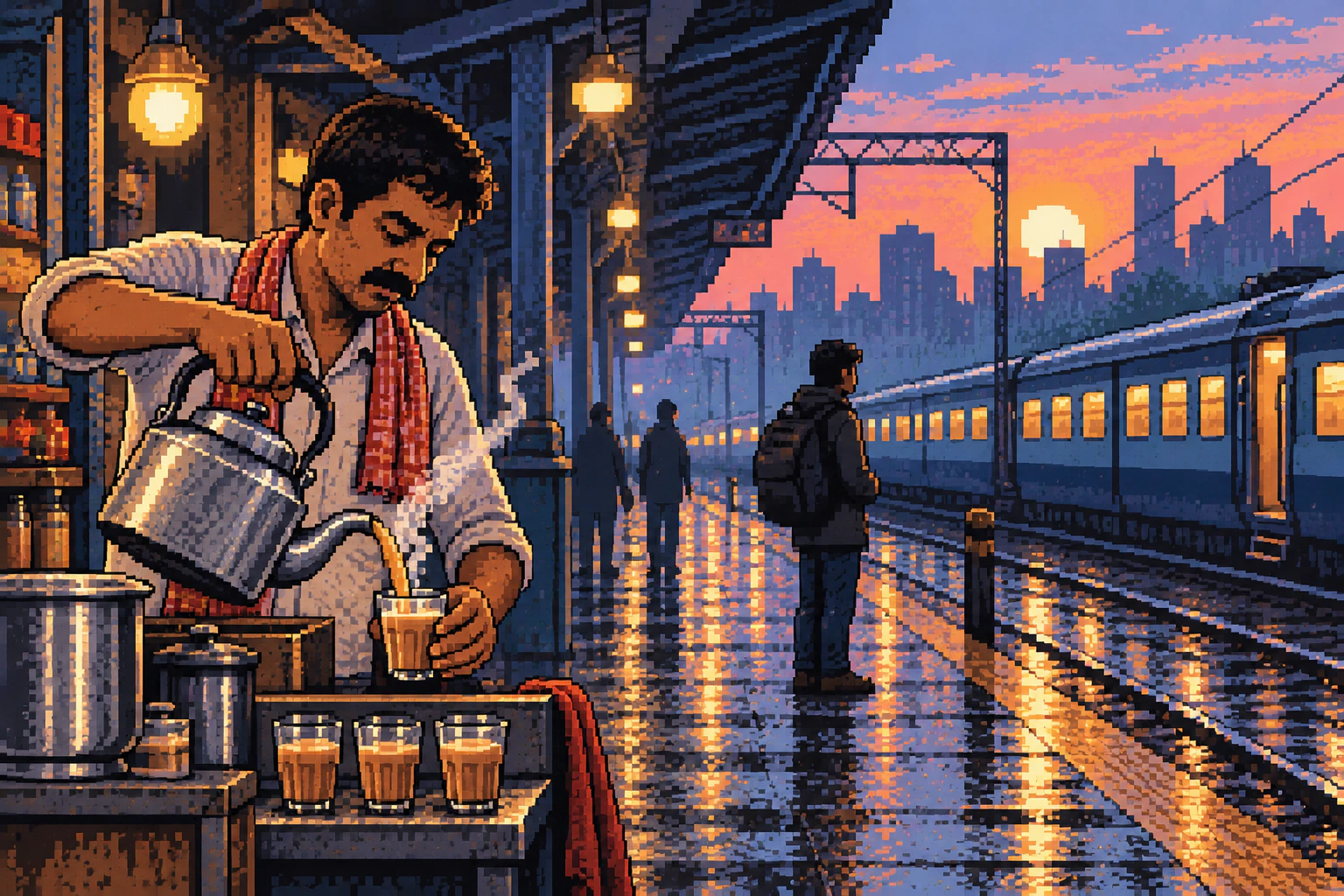
Sketch and hand-drawn
Pencil lead on rough paper. Sketch animation leaves construction lines, graphite smudges, and eraser marks visible on purpose. The music video for a-ha Take On Me in 1985 rotoscoped thousands of live-action frames with graphite pencils, giving every second a vibrating tremble. Disney mixed that pencil energy with digital modeling in Paperman in 2012, drawing vector lines directly across 3D shapes. You see the same raw draftsmanship in studio storyboards and pre-production concept art.
Working marks stay visible. A single frame reveals sketch work through gray graphite sheen, paper grain tooth, and loose crosshatching that runs outside silhouettes. AI models often over-clean this style into finished ink drawings. If your output looks too polished, specify rough graphite pencil hatching, visible paper tooth, and charcoal smudges.
A chaiwala pouring tea from a steel kettle into a small glass at a rain-soaked Mumbai railway platform at dawn, steam rising, one commuter waiting under the platform light. Rough pencil sketch animation style, visible graphite hatching, loose cross-contour lines, textured white paper grain, charcoal dust smudges, eye-level candid documentary camera framing, 1980s music video rotoscope drawing. No text, no watermark.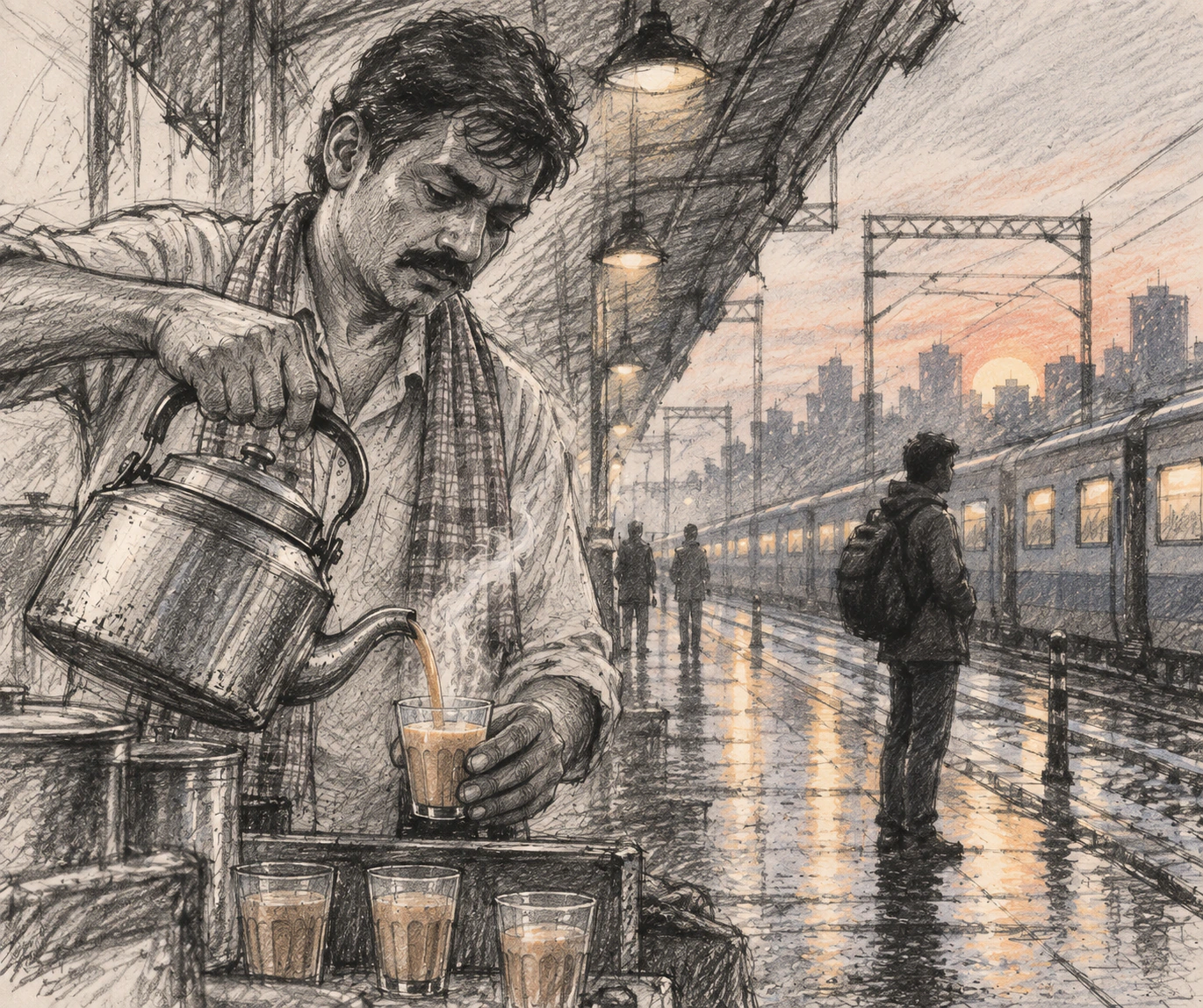
Painted: watercolor, oil, ink
Wet pigment bleeding into heavy cotton paper. Painted animation abandons ink boundaries so color washes carry the scene. Skip physical paper words and the model defaults to flat digital gloss. Prompting for wet-on-wet watercolor washes, cold-press cotton paper texture, and raw pigment bloom brings back the bleeding edges.
Edges stay soft. Look for paint ridges, canvas tooth, and stains where water pushed pigment across cotton fibers. Loving Vincent in 2017 hired over a hundred oil painters to produce every frame on canvas, while The Tale of the Princess Kaguya in 2013 let watercolor washes breathe against empty paper space. Song of the Sea used transparent watercolor backdrops in 2014, and Mary Blair gave mid-century Disney concept art that same gouache boldness.
A chaiwala pouring tea from a steel kettle into a small glass at a rain-soaked Mumbai railway platform at dawn, steam rising, one commuter waiting under the platform light. Expressive wet-on-wet watercolor painting, transparent pigment washes, raw edge bleed on heavy cold-press cotton paper, soft ink details, natural daylight through rainy gloom, 35mm wide painterly framing, storybook illustration look. No text, no watermark.Experimental and abstract
Throw out the camera and normal perspective. Nothing here is realistic. Experimental animation uses motion, geometric color, and abstract rhythm instead of literal storytelling. Abstract prompts drift into generic neon sci-fi unless you anchor them to vintage gear: ask for analog video synthesizer scanlines, disorienting dutch angles, and flat paper cutout geometry. In a finished still, look for broken anatomy, clashing color bands, and analog scanline noise. Contemporary artists mix glitch compression errors, datamoshing artifacts, and dream logic transitions. Fantasia took this path in 1940 with its abstract Toccata and Fugue sequence, Yellow Submarine built a pop-art world in 1968, and Norman McLaren drew and scratched shapes straight onto the film strip, no camera involved.
A chaiwala pouring tea from a steel kettle into a small glass at a rain-soaked Mumbai railway platform at dawn, steam rising, one commuter waiting under the platform light. Experimental abstract animation, fragmented geometric forms, surreal color shifts, analog video synthesizer scanlines, visible film grain distortion, disorienting dutch tilt camera, late 1960s avant-garde psychedelic film look. No text, no watermark.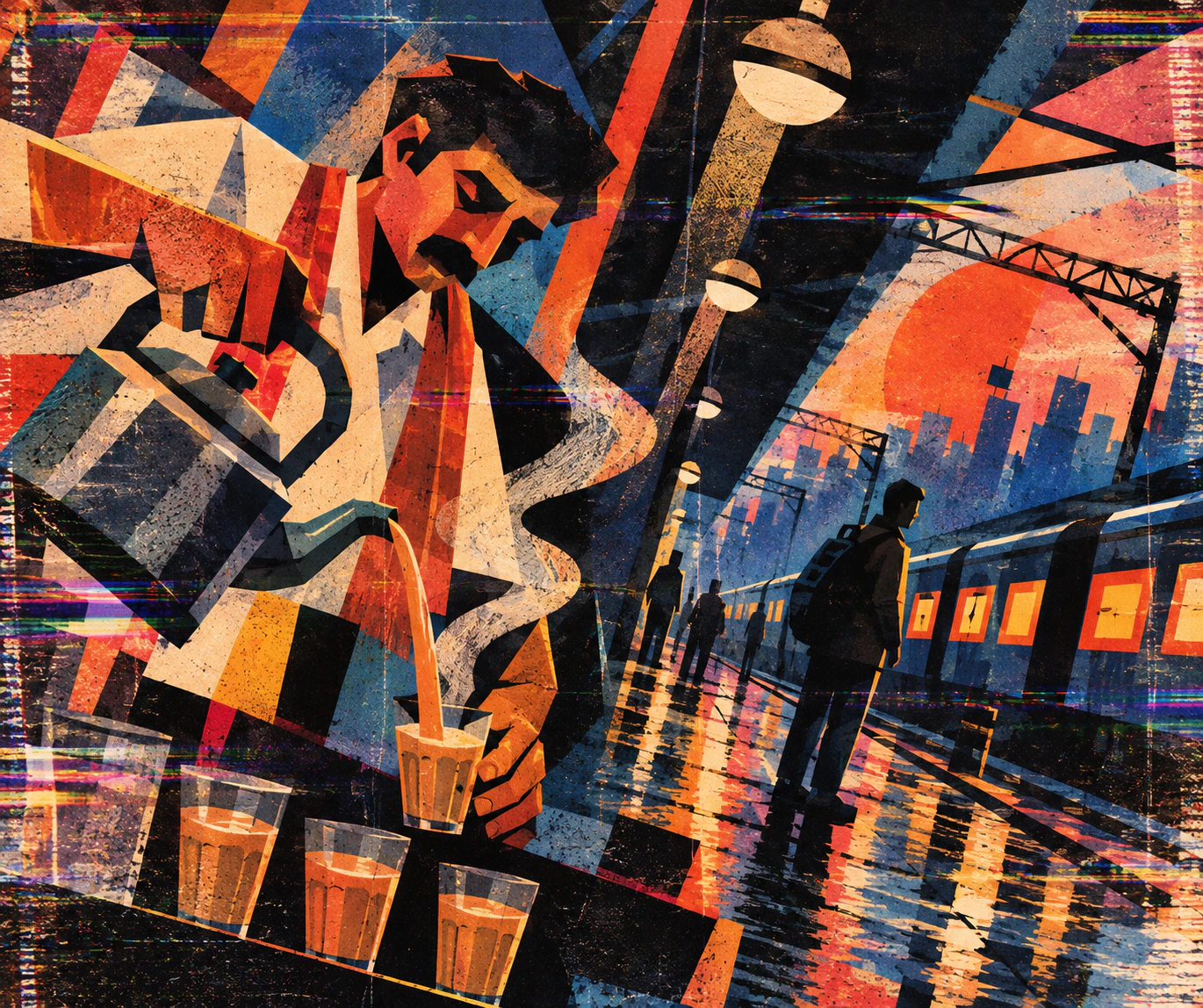
Mixing styles, and what breaks
Styles mix well when they share a technique. Into the Spider-Verse combined comic book halftone dots with 3D models because print dots map cleanly onto digital skin. Styles break when their physical materials fight each other. Asking for a watercolor stop-motion scene forces the generator to pick between wet paper wash and solid clay armatures. The model picks one material and throws the other away. Your best rule is simple: pick one primary style keyword, add one material modifier, and stop there. Adding three conflicting styles leaves you with muddy digital mush instead of an interesting hybrid.
Frequently asked questions
What is the difference between 2D and 3D animation?
Two-dimensional animation relies on flat drawings on paper or digital layers. The artist draws every frame by hand, focusing on outlines and silhouettes. Three-dimensional animation builds digital puppets and rooms inside virtual space. A computer calculates where the light falls and how the virtual camera sees the model. 2D feels like living illustration. 3D feels like a miniature set with real volume.
Is anime a cartoon?
Anime is simply the Japanese word for animation, but the two words point to different drawing traditions. Western cartoons lean into comedy, flexible rubber anatomy, and quick visual gags. Anime focuses on human proportions, dramatic camera angles, and detailed painterly backgrounds. Both are animated, but their pacing and drawing rules are completely different.
Which animation style is the easiest to get from an AI image generator?
Flat 2D cel animation, cartoons, and pixel art land on the first try because models have seen millions of them with clear outlines. Stop-motion and watercolor take more work. You have to name real materials like clay thumbprints or cold-press paper to keep the tool from giving you shiny digital airbrushing. Photorealism is the hardest style to keep consistent across several frames.
Can AI make a stop-motion or claymation look?
Yes, but you have to describe the workshop instead of writing claymation alone. If you only type claymation, most models give you smooth plastic skin. Add physical details like thumbprints in the clay, wire armature joints, tiny fabric clothing, and a macro tilt-shift lens. Those physical cues tell the generator to simulate a tabletop set instead of digital CGI.
Should I write "Pixar style" or "Ghibli style" in a prompt?
Describe the physical look instead of naming studios. Many tools block company names entirely, while others produce unpredictable results. Prompting for round silhouettes, soft subsurface skin, and painterly morning clouds gets you the look you want across Midjourney, ChatGPT, and Gemini without triggering content filters or copyright blocks.
What are the main types of animation styles?
The twelve main styles are 2D cel, 3D computer animation, anime, cartoon, photorealistic, stop-motion, motion graphics, comic illustration, pixel art, pencil sketch, traditional painted animation, and experimental abstract animation. If you are starting out, try flat 2D, cartoon, pixel art, and pencil sketch first because their hard lines produce reliable images right away.